Available
Apr '26


Before eForms matured as a platform, many regulated forms and online journeys across NatWest Group were delivered using third-party solutions outside the organisation. These tools were expensive to operate, slow to change, inconsistently applied across brands, and often unable to support more complex or non-standard journeys without dedicated development teams.
This created significant commercial and operational pressure: high ongoing cost, long delivery timelines, fragmented application of standards, and limited control over quality, risk, and future change.
eForms began as an early internal alternative — an MVP platform with a small number of forms and limited features — intended to standardise delivery and bring greater control back into the organisation. My initial role was to help shape and mature this capability.
It quickly became clear that standardisation alone would not be enough.
Bringing forms in-house would only succeed if the platform did more than replicate existing tools. It needed to support a wide range of regulated journey needs, guide teams toward better decisions, and reduce the likelihood of poor or risky implementations scaling across the bank.
Drawing on experience with complex regulated online journeys and large web platforms, I reframed eForms from a component library into a designed system — one that combined standardisation with guidance, appropriate constraints, and early design involvement to improve outcomes at scale.
This reframing allowed eForms to move beyond cost saving into a strategic platform that improved speed, control, and quality while reducing long-term risk.


Led product design as eForms evolved from an early MVP into a bank-wide internal platform.
Took the product from its original Axure RP designs and limited feature set through Sketch and Abstract, aligning closely with the internal web framework that underpinned the platform. Established shared patterns, components, and interface principles, later transitioning this work into Figma using variables, modes, and prototyping to support scale and reuse.
Applied awareness of emerging low-code and web platform patterns to focus heavily on the authoring and editor experience, improving usability, reducing errors, and decreasing time to delivery for internal teams.
Played a central role in influencing what was taken into development — reviewing incoming journey requirements, shaping them to meet accessibility, regulatory, and usability standards, and ensuring the most impactful solutions were prioritised.
Acted consistently as an advocate for users — both internal authors and end customers — advising franchise teams on journey structure, edge cases, vulnerable customer needs, and risk considerations. Through exposure to a wide range of journeys and teams, developed strong subject-matter awareness and the ability to map complex processes quickly and accurately.
Established regular cross-franchise workshops and stakeholder sessions to align needs, surface interdependencies, and reduce later rework. Supported product owners and business analysts as a sounding board, helping translate user and franchise needs into clearer, more actionable requirements.
Proposed a longer-term redesign of the platform interface, supported by clear benefits cases, which helped secure backing for refactoring the fragmented and constrained codebase in pursuit of a more scalable future authoring experience.
Worked closely with product, engineering, compliance, risk, and brand teams to align on shared goals, appropriate levels of friction, and the right balance between speed, security, and usability.
Rather than removing friction indiscriminately, focused on ensuring the right friction existed in the right places — supporting regulatory requirements, protecting vulnerable users, and reducing long-term risk while still enabling efficient delivery.
Often operated at the intersection of strategy, design, and delivery — supporting teams in understanding user needs more deeply, identifying edge cases early, and avoiding decisions that would introduce future rework or risk.
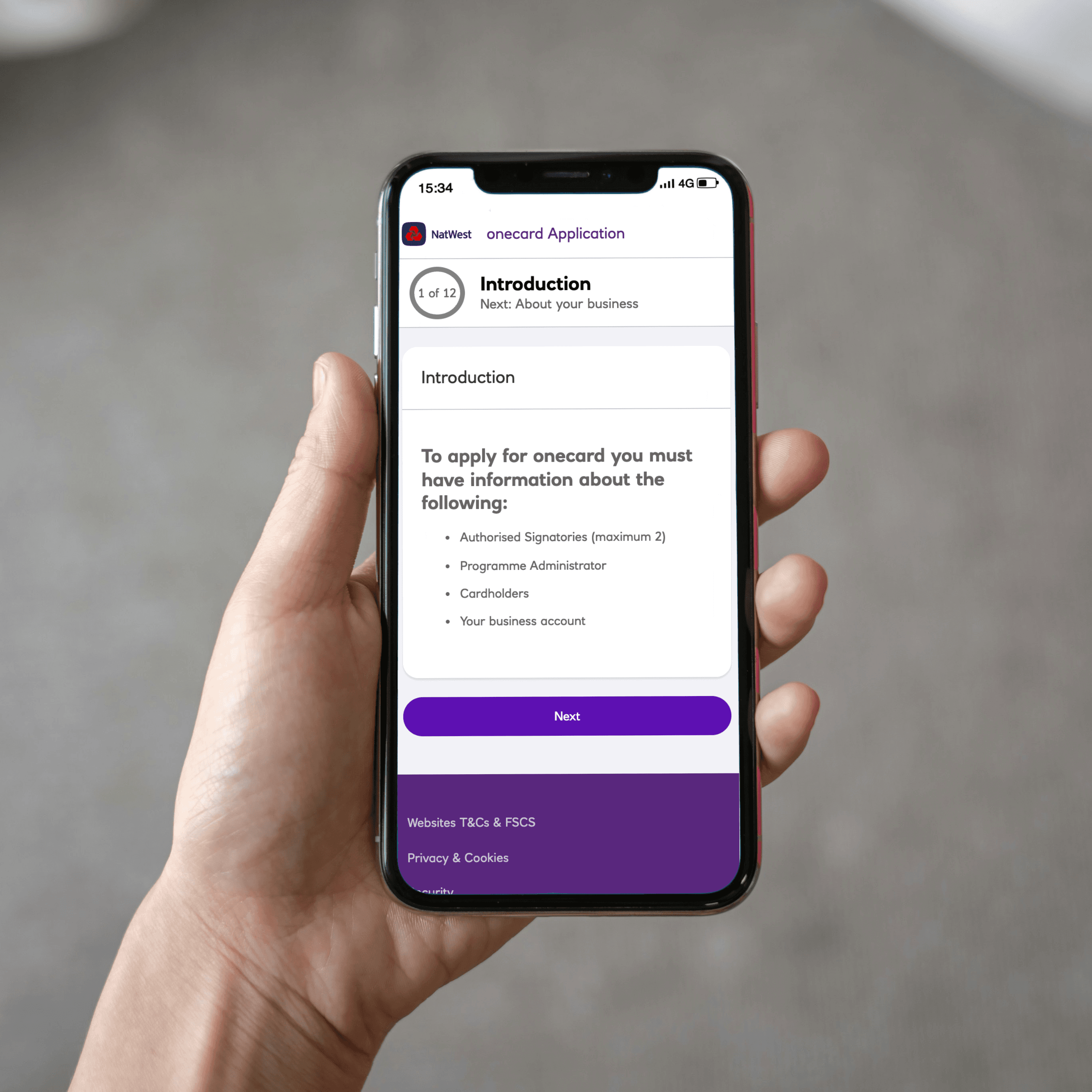
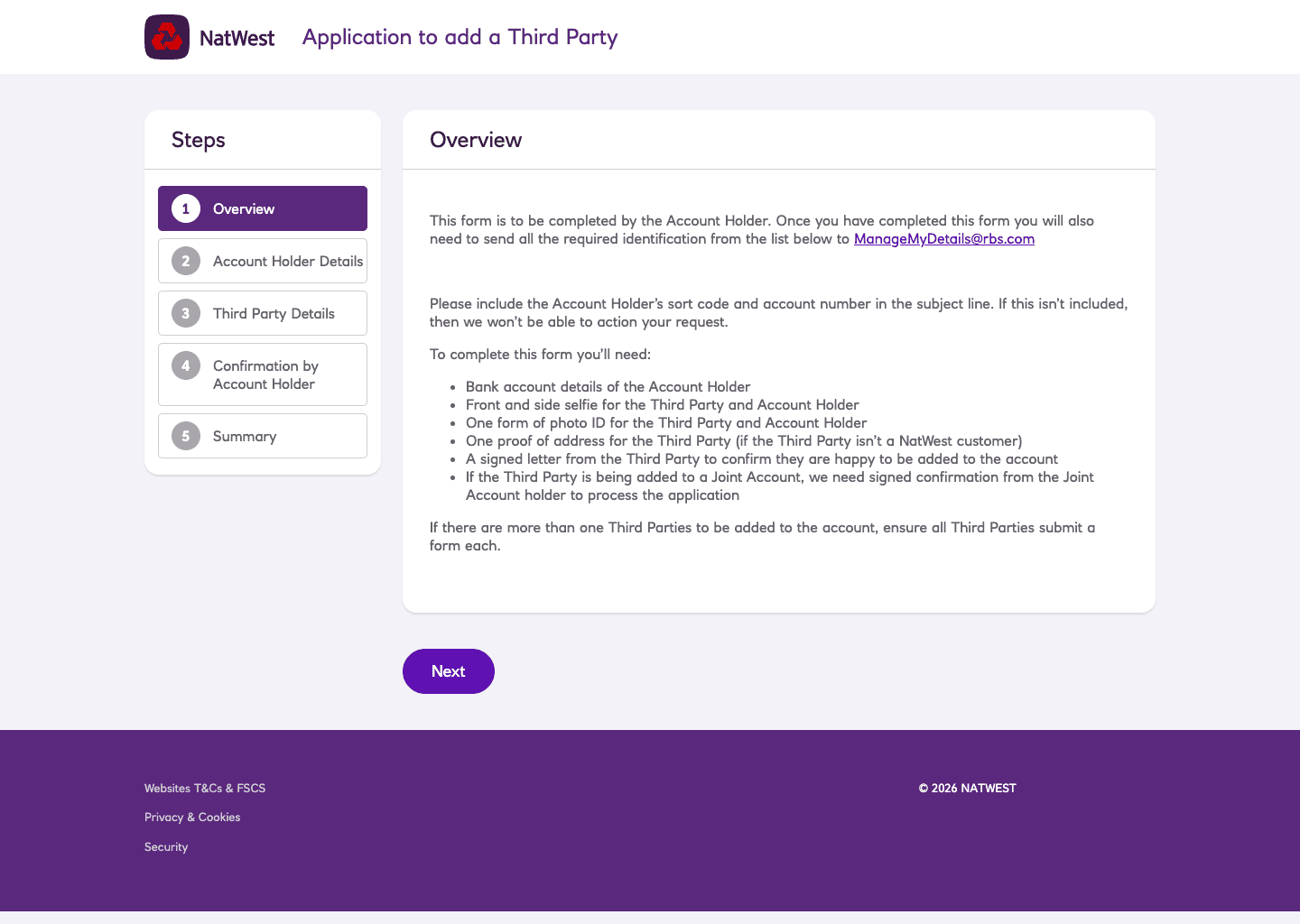
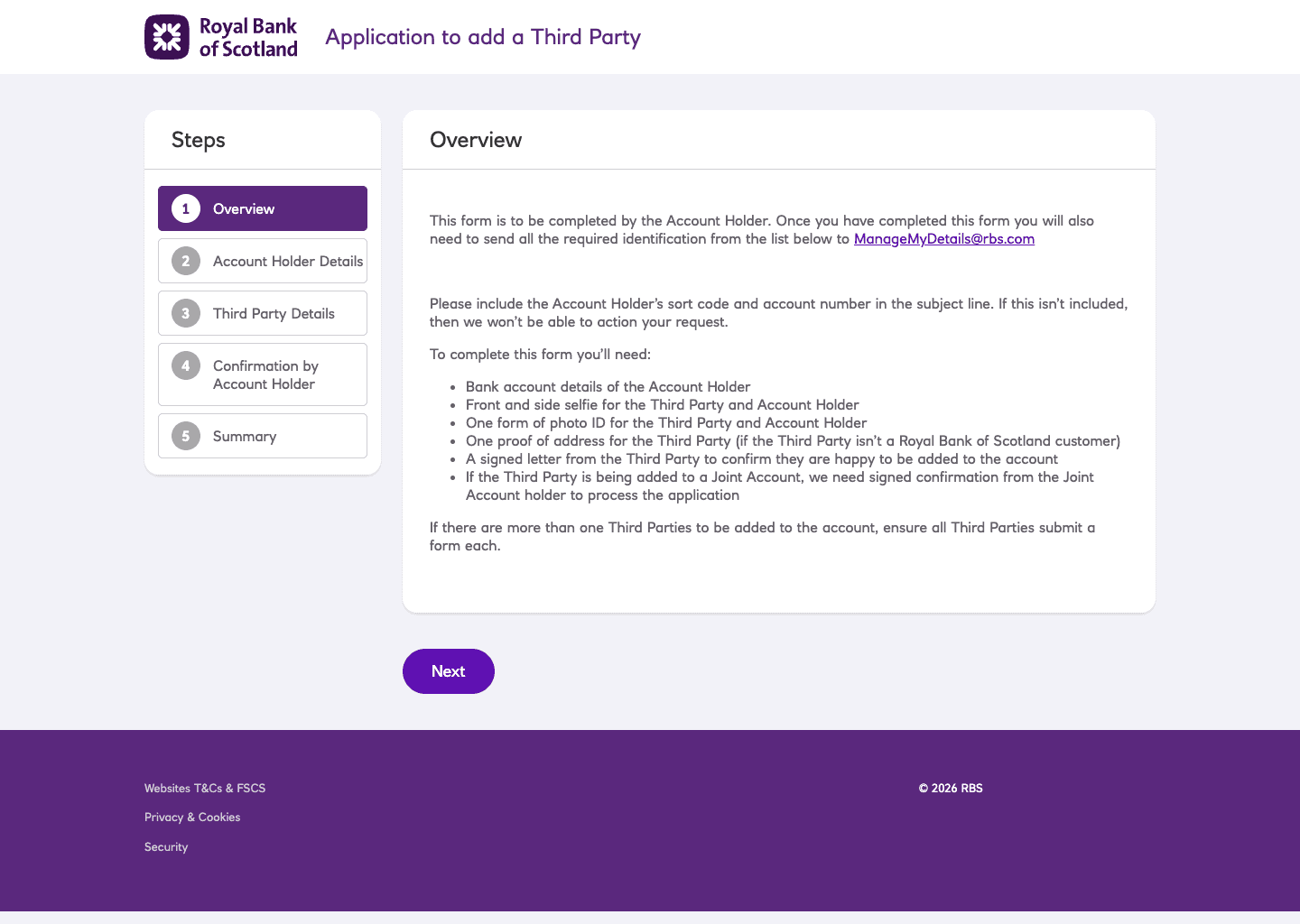

400+
Journeys.
Delivered through a shared internal platform
6+
Brands
Supported from a single governed platform
Faster Delivery
Months, not years to rollout large-scale brand and regulatory change
Reduced Third-Party Reliance
Lower cost, greater control, faster iteration
eForms became a durable internal platform rather than a delivery bottleneck — supporting ongoing delivery across brands and products while reducing the cost, risk, and effort associated with change.
Through systems thinking, product vision, and joined-up design leadership, the platform evolved into a means for sustained business value, operational efficiency, and safer delivery at scale.

Tahir Noor
Lead Business Analyst, NatWest
“I was consistently impressed by Mark’s expertise, collaborative spirit, and dedication.
What stood out most was his willingness to step in proactively — whether to clarify design decisions, troubleshoot issues, or support cross-functional alignment — making him an invaluable partner to the business analysts.”